Forex Trading for Beginners: A Practical Start
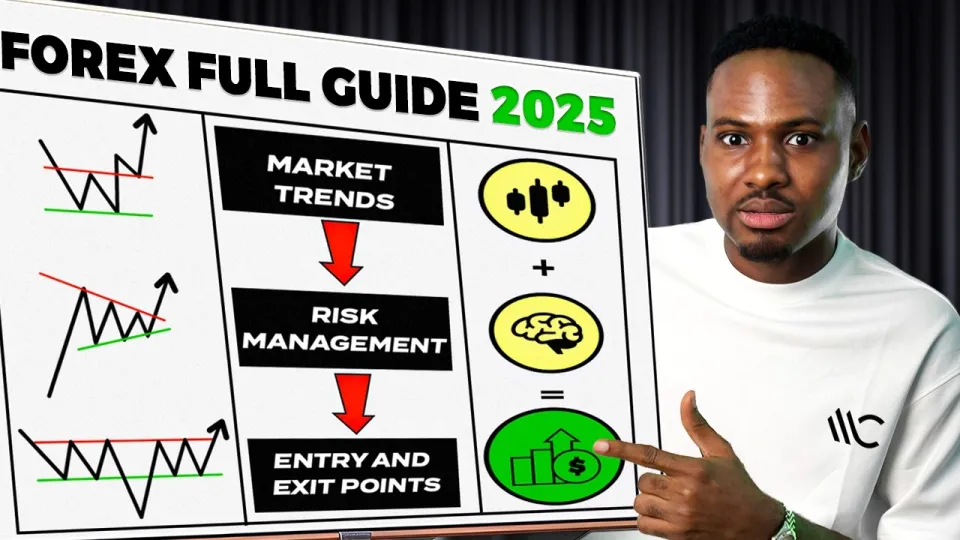
Video: How To Start Forex Trading For Beginners’ 2025 (Full Course)
You can order the same kind of articles for your own video to boost it on YouTube and Google. Just message the Telegram bot @sat_sit_bot. Articles with your video embedded are written and posted by the bot itself — on popular topical sites (no ads). Free trial — 50 articles.
· based on the channel Jeffrey Benson Forex
Forex trading for beginners means buying and selling currency pairs on an over-the-counter market, and starting properly requires three things: a regulated broker account, a trading platform such as MetaTrader 5, and a written risk rule that caps the loss on any single trade. Everything else — strategy, entries, indicators — is built on top of that base. The full beginner walkthrough from Jeffrey Benson Forex follows the same order, and the paid student track is available via the Fire Pips FX plans page.
What forex trading actually is
Forex is the simultaneous purchase of one currency and sale of another, quoted in pairs such as EUR/USD or GBP/JPY. The first currency is the base, the second is the quote: EUR/USD at 1.0850 means one euro costs 1.0850 US dollars. There is no central exchange — trades are routed through a network of banks, brokers and liquidity providers, which is why spreads and execution differ between brokers.
The dollar sits on one side of roughly 88% of all currency trades, according to the Bank for International Settlements triennial survey, which makes USD pairs the deepest and usually the cheapest to trade. Daily turnover in the foreign exchange market runs in the trillions of dollars, so no single retail trader can move a major pair — but leverage lets a small account carry a large position, and that is where beginners get hurt.
Three structural facts shape every decision:
- Currency prices are driven by interest-rate expectations, inflation data, employment reports and central-bank communication, not by chart patterns alone.
- Most retail access is through contracts for difference or rolling spot with leverage, so a 1% move against a 1:500 position wipes out a large share of the margin.
- Currency pairs trade nearly 24 hours a day, five days a week, which means a position left open overnight can gap past your stop.
How the forex market works across the trading day
The market runs in four sessions — Sydney, Tokyo, London and New York — and the two overlaps are where volume concentrates. The London–New York overlap, roughly the middle of the US morning, is the busiest window for EUR/USD and GBP/USD; the Tokyo session is quieter for majors but active in AUD and JPY crosses.
Session choice changes the character of the chart. A breakout strategy that works in the London open can produce false signals in the thin hours before Asia closes. Beginners should pick one pair and one two-to-three-hour window and study it for several weeks rather than scanning everything.
Broker mechanics matter just as much as the clock. A spread is the difference between bid and ask; a commission is a separate per-lot fee; swap is the interest charged or paid for holding a position overnight. A raw-spread account with a commission can be cheaper than a zero-commission account with a wide spread, but only if you trade enough volume for the difference to matter. Demo accounts mirror pricing but not slippage or requotes under stress, so treat demo results as practice, not proof.
Tools every beginner needs before the first trade
A workable beginner setup is small: a broker account, MetaTrader 4 or 5, a position-size calculator, an economic calendar and a trading journal. MetaTrader is the de facto standard because most brokers support it and it handles charts, orders, stop-losses and history in one place.
- Broker account. Check regulation, segregated client funds, withdrawal terms and the minimum deposit. Jeffrey Benson Forex points viewers to Assex Markets with the partner code 1699134 — worth noting as a commercial recommendation, so verify the licence yourself.
- Platform. MT5 linked to the broker login; learn market order, pending order, stop-loss, take-profit and the one-click close before risking real money.
- Position-size calculator. Converts a fixed dollar risk and a stop distance in pips into lot size. This single tool prevents most account blowups.
- Economic calendar. Rate decisions, CPI and non-farm payrolls move currencies; knowing when they land stops you from being surprised.
- Journal. Screenshot, reason for entry, risk in dollars, outcome, emotion. Twenty logged trades teach more than two hundred unlogged ones.
Building a basic forex strategy foundation
A beginner strategy is a set of rules for direction, entry, exit and risk — written down before the trade, not improvised during it. Price action on higher timeframes is the simplest starting point: mark the daily trend, wait for a pullback into a level, and take the entry only when the lower timeframe confirms.
A concrete framework that holds up for beginners:
- Define direction on the daily chart — higher highs and higher lows, or the reverse.
- Mark support and resistance levels where price previously reversed or consolidated.
- Set risk per trade at 1% of account equity, never more than 2%.
- Place the stop-loss beyond the level that invalidates the idea, then calculate lot size from that distance.
- Set a target of at least twice the risk so a 40% win rate still breaks even.
Risk management is the part that decides survival. A 1% risk rule means ten consecutive losses cost about 10% of the account; at 5% per trade the same streak costs roughly 40%, and recovering from 40% requires a 67% gain. Traders in the comments of the Jeffrey Benson Forex course single out risk management as the piece that finally made sense — not the entries.
Placing a first trade without gambling
A first live trade should be the smallest size the broker allows, taken on a demo-tested setup with a predefined stop. Open the order ticket, confirm the pair, direction, lot size, stop-loss and take-profit, then execute — and check the position appears with both protective orders attached. If the platform shows an open position with no stop, fix it immediately.
Expect the first trades to feel different from demo: real money makes a two-pip pullback look like a disaster. That is why the risk per trade must be small enough that the outcome is emotionally irrelevant. Many beginners copy signals from a channel such as https://t.me/firepipsignals as a bridge while learning; copying trades teaches execution and discipline but not analysis, so it should be temporary rather than a permanent substitute for your own process.
Common beginner mistakes and how to avoid them
The mistakes that empty accounts are consistent and predictable, and almost all of them are about size and process rather than prediction. Oversized lots top the list: a trader risking 10% per trade needs only a normal losing streak to lose the account. Moving a stop-loss to avoid taking a loss turns a small controlled loss into an uncontrolled one, and revenge trading after a loss multiplies the damage.
Other recurring errors: trading during major news without accounting for spread widening, switching strategies after three losing trades, using leverage as a substitute for capital, and skipping the journal so no lesson is retained. Beginners also over-tool their charts — five indicators that disagree produce paralysis, while price, two moving averages and a level are enough to start.
Questions beginners keep asking
The doubts that come up most often are about time, capital and the difference between learning and earning. How long before profitability? Realistically several months of consistent screen time and a few hundred logged trades; anyone promising a fixed timeline is selling something. How much capital is needed? Enough that 1% risk is a meaningful but survivable amount — many brokers open accounts from $10–$100, but a tiny account with correct risk cannot generate income, only practice. Is a demo account enough? It builds mechanics but not the emotional pressure of real money, so run a small live account alongside it once the rules are stable. Do I need to quit my job? No — the London and New York sessions overlap with a normal working day for many time zones, and part-time study is the standard path.
Useful links
- Student plans and course access: https://firepipsfx.com/plans
- Free daily signal channel: https://t.me/firepipsignals
- Broker registration referenced in the course: https://my.assexmarkets.com/auth/register?partner_code=1699134
- Premium signal group access: https://t.me/jeffreybenzhelpbot
Bottom line
Forex trading for beginners is learnable, but the sequence matters: understand what a currency pair is, pick one pair and one session, size every position from a fixed 1% risk, and journal the results. Strategy comes second; survival comes first. The full course from Jeffrey Benson Forex is a sensible spine for that learning path because it moves from market mechanics through tools and risk to a first trade and the mistakes that follow. Work through it with a notebook and a demo account before funding anything, and use the Fire Pips FX plans page if you want the structured student track.
Key takeaways
- Forex is the exchange of one currency for another on an over-the-counter market; the US dollar is on one side of roughly 88% of all trades.
- Four sessions — Sydney, Tokyo, London and New York — overlap twice a day, and the London–New York overlap is where most volume and volatility sits.
- A beginner needs three things: a broker account, a charting/trading platform such as MT5, and a written risk rule that caps loss per trade.
- A stop-loss and a position size calculated from it matter more than the entry signal; most blown accounts die from oversized lots, not bad analysis.
- Jeffrey Benson Forex structures beginner training around market mechanics, tools, strategy foundations, a first trade and common mistakes.
Source: How To Start Forex Trading For Beginners’ 2025 (Full Course) · Markdown version
Questions & answers
How much money do I need to start forex trading?
There is no fixed minimum, and many brokers open accounts from $10–$100, but the amount must be large enough that risking 1% per trade is survivable and meaningful. A very small account is fine for practicing execution and discipline, yet it cannot realistically produce income. Decide the risk budget first, then choose the account size that fits it.
How long does it take to become consistently profitable?
Most beginners need several months of regular screen time and a few hundred journaled trades before results stabilize. Progress depends on having written rules, a fixed risk per trade and honest record-keeping rather than on the number of videos watched. Anyone offering a guaranteed timeline is selling a promise, not a method.
Is it safe to copy trades from a signal channel?
Copying signals can teach order execution, position sizing and discipline while you learn, and channels such as the free Fire Pips feed make that easy to try. The limitation is that it does not build chart-reading or analysis skills, and it transfers the risk decisions to someone else. Treat copying as a temporary bridge, not a permanent replacement for your own tested process.
What is the single most important beginner skill?
Position sizing driven by a fixed risk limit, usually 1% of account equity per trade, with the stop-loss placed where the trade idea is actually invalidated. Ten losses in a row at 1% cost about 10% of the account and are recoverable; the same streak at 5% per trade costs roughly 40% and demands a 67% gain to recover. Entries matter far less than staying in the game long enough to learn.